
Under-ordering stretch film means mid-shift stockouts; over-ordering ties up working capital in inventory. Here's how to estimate what you actually need.
The core variables
Stretch film consumption per pallet depends on:
- Pallet dimensions (height and footprint) — taller pallets need more wraps to fully cover.
- Number of wrap layers — typically 3–5 full rotations for standard containment, more for heavier or less stable loads.
 3. Film yield — how much coverage you get per kilogram or per metre of film, which depends heavily on whether it's pre-stretched (see the Pre-Stretched Film guide) and the gauge (see the Micron Guide).
A simple estimation approach
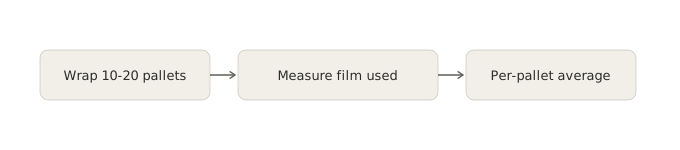
Rather than a precise formula (which varies by exact pallet geometry and wrapping machine settings), use this practical method:
- Run a test batch. Wrap 10–20 typical pallets with a known quantity of film, and measure how much film (by weight or roll count) was consumed.
- Calculate your per-pallet average from that test batch.
- Scale to your monthly/weekly volume to estimate bulk ordering needs, and add a reasonable buffer (10–15%) for variability in pallet sizes and occasional re-wraps.
This approach is more reliable than a generic online calculator, because your actual pallet sizes, wrapping method, and film gauge are specific to your operation.
Levers that reduce consumption without compromising containment
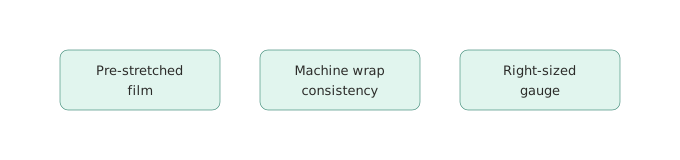
- Switching to pre-stretched film can meaningfully reduce material used per pallet for the same coverage (see the yield comparison in the Pre-Stretched Film guide).
- Machine wrap consistency — manual hand-wrapping tends to use more film than necessary due to inconsistent tension and overlap; a wrapping machine applies more consistent, efficient coverage.
- Right-sizing the gauge — using a heavier gauge than your load actually needs wastes material; see the Micron Guide to match gauge to load.
A real-world example
A warehouse manager estimated their monthly film needs using a generic online formula and consistently over-ordered by nearly 20%. Running an actual test batch of 15 pallets with their specific machine settings and pallet dimensions gave a per-pallet consumption figure meaningfully different from the generic estimate — because their pallets were shorter than the formula's assumed average height. Switching to the measured, test-batch-based figure for future orders eliminated the recurring over-order.
FAQ
How often should I re-run the test-batch measurement? Whenever something changes that would affect consumption — a new pallet size range, a switch in film gauge or type, a change from hand to machine wrap, or new staff with different wrapping habits. Otherwise, an annual check is a reasonable default.
Does the number of wrap layers really vary that much between operations? Yes — some operations standardize on 3 rotations for light loads and 5+ for heavier ones, and inconsistent internal practice (different staff doing different numbers of wraps) is itself a common source of consumption variability worth investigating.
Is it better to over-order or under-order stretch film for a bulk purchase? Given stretch film's reasonable shelf life (see the Storage guide), a modest buffer (10–15%) above your measured estimate is safer than under-ordering and risking a mid-operation shortage, but a large over-order ties up capital unnecessarily.
Can PackGPT calculate my exact film needs for me? PackGPT can help reason through the estimation approach and flag what to measure, but the most accurate number will always come from your own test batch, since it accounts for your specific pallets, machine, and technique.
Want help estimating bulk order quantities for your actual pallet volume? Talk to PackGPT or generate a quote.