
"Pre-stretched" is one of the more misunderstood specs in stretch film — here's what it actually means and why it's worth understanding before you buy.
What pre-stretching means
Stretch film's whole value comes from its ability to elongate and cling tightly around a load. Normally, this stretching happens during application — either by a machine or by an operator physically pulling the film taut by hand.
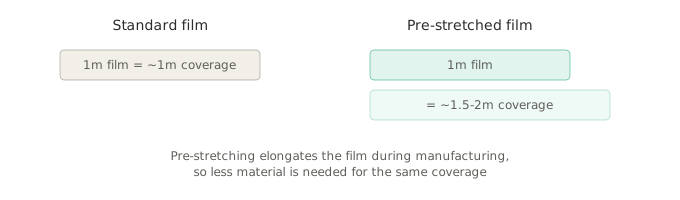
Pre-stretched film has already been elongated by 10–15%, sometimes more, during manufacturing, before it's wound onto the roll. That means less physical effort is needed at the point of application, since much of the stretching work is already done.

Why this matters in practice
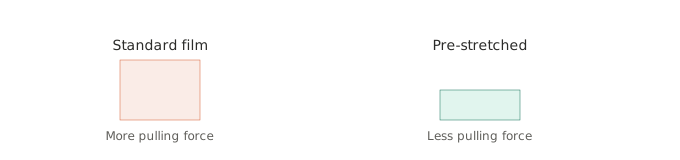
- Less physical strain for hand-wrap operators — since the film is already partially stretched, less pulling force is needed, reducing fatigue on repetitive wrapping tasks.
- More coverage per roll — because the film is pre-elongated, a given length of film covers more surface area than the same length of standard film. This can mean genuine cost savings per pallet, even if the pre-stretched roll costs slightly more upfront.
- More consistent tension — pre-stretching is done under controlled manufacturing conditions, which tends to produce more even film tension than manual pulling, especially with less experienced operators.
When to use it
Pre-stretched film is most commonly used in hand-wrap applications (see Hand Wrap vs Machine Wrap) — machine-wrap systems typically apply their own controlled stretch during the wrapping cycle, so the manufacturing pre-stretch matters less there.
If your team hand-wraps a meaningful volume of pallets regularly, pre-stretched film is worth evaluating both for the labour-ease benefit and the potential per-pallet cost savings from better yield.
A real-world example
A textile packer whose staff hand-wrap 40+ pallets a day reported hand fatigue and inconsistent wrap tightness by the end of long shifts, especially from newer staff still building technique. Switching to pre-stretched film reduced the physical pulling effort required, and wrap consistency between experienced and new staff became noticeably closer, since much of the stretching was already built into the film rather than depending on the operator's technique.
FAQ
Does pre-stretched film cost more per roll than standard film? Often yes per roll, but the actual coverage per roll is also higher due to the elongation — the fairer comparison is cost per pallet wrapped, not cost per roll, and pre-stretched frequently comes out ahead on that basis for hand-wrap operations.
Can pre-stretched film be stretched further during application, or is it already at its limit? It can generally still be stretched somewhat further during application — pre-stretching elongates it partway, not to its full capacity, so operators still apply some additional tension, just less than with standard film.
Is pre-stretched film suitable for heavy or irregular loads? The pre-stretch property is about ease of application and yield, not puncture resistance — for irregular/sharp loads, the film-type choice (cast vs blown, see Cling Force vs Puncture Resistance) still matters independently of whether it's pre-stretched.
How would I know if switching to pre-stretched film is worth it for my operation? Track actual film consumption per pallet over a couple of weeks with your current film, then compare against pre-stretched film's typical yield improvement — see the Coverage Guide for the practical measurement approach.
Curious whether pre-stretched film would save you money at your volume? Talk to PackGPT with your typical pallet count.