
What is a micron, actually?
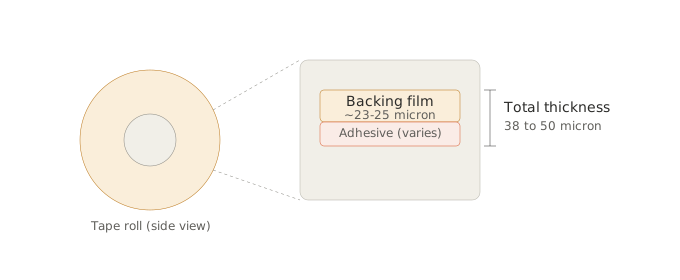
A micron (short for micrometre) is a unit of length equal to one-thousandth of a millimetre. On a roll of BOPP tape, the "micron" number refers to the total thickness of the tape film — the clear or coloured backing layer plus the thin adhesive coating underneath it, measured together.
To put the scale in perspective: a single human hair is roughly 70 microns thick. Most BOPP tape — even at the higher end of the range, 50 microns — is actually thinner than a strand of hair. That thinness is exactly why the backing film and adhesive chemistry matter so much: a physically thin layer still has to hold a carton shut through loading, transit, and handling, which is a matter of material engineering, not just bulk.
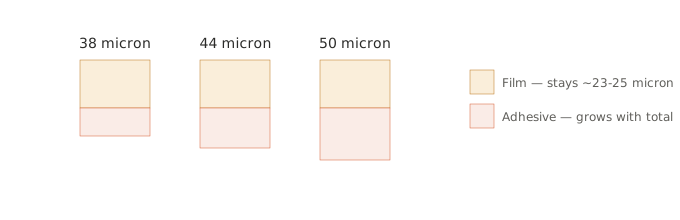
Here's a detail that surprises most first-time buyers: the "micron" number isn't one uniform layer. It's two layers — a backing film that stays roughly 23–25 microns across most common tape grades, and an adhesive coating on top of it. Going from a 38-micron tape to a 50-micron tape isn't mainly "thicker plastic" — it's mostly a thicker adhesive coat. That's also why higher-micron tape tends to pair naturally with a hot-melt upgrade rather than just being a heavier version of the same acrylic.
Why micron matters more than "thicker is better"
Micron measures the thickness of the tape film itself — not the strength, not the stickiness, just the physical thickness. It's tempting to assume higher micron always means a better tape, but that's not quite right. Micron determines how much puncture and tear resistance the tape has, while the adhesive (acrylic vs hot-melt) determines how well it sticks. The two work together, and picking the right micron for your actual carton weight avoids both under-taping (seal failure) and over-spending (paying for strength you don't need).
The micron range, explained
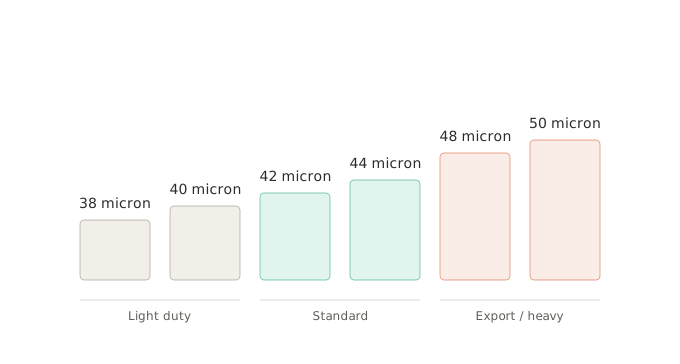
38 micron — the market workhorse Despite being on the lighter end of the common range, 38 micron is actually the most widely used thickness in the Indian BOPP tape market — not a niche light-duty option. With good adhesive quality, tape in the 38–44 micron range reliably handles cartons from roughly 10 up to 30kg, covering the large majority of standard retail, ecommerce, and general B2B shipping. If you're unsure which micron to pick, 38 micron is the realistic default for most everyday cartons.
40 micron — general purpose A close cousin to 38 micron with marginally more film thickness. Works across a similar broad weight range, often chosen based on supplier availability or slight preference rather than a fundamentally different use case.
42 micron — standard, slightly heavier A step up for cartons that see more handling stress — multiple transit legs, hub sorting — even within a similar weight range to 38–40 micron.
44 micron — standard, heavier-duty More resistance to punctures and rough handling. A reasonable choice when cartons are heavier still, or when the shipping route is less predictable.
48 micron — heavier and export-adjacent Used for heavier cartons and B2B shipments where extra margin matters, and commonly the starting point before moving to hot-melt at 50 micron for export.
50 micron — export and monsoon-ready The step up from 48 micron, often paired with hot-melt adhesive. Recommended for export shipments and cartons made from recycled or damp-prone board where extra sealing margin matters; during monsoon it's only needed for direct-water-exposure routes, not as a seasonal default.
Quick decision guide
Default recommendation, unless a specific factor says otherwise: 38 micron. This is what most real shipments actually use — treat it as the starting answer, not the "safe" option among several equally-valid choices.
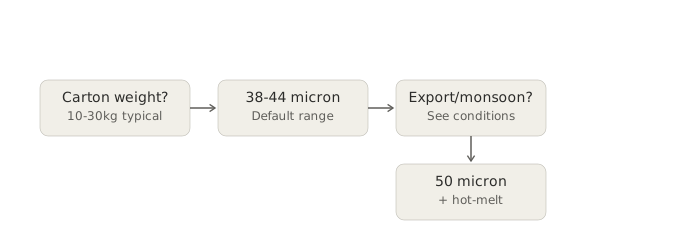
- Everyday retail, ecommerce, or general B2B carton, roughly 10–30kg — 38–44 micron (38 is the common default)
- Heavier cartons or higher-value B2B shipments — 48 micron
- Export, direct rain/water exposure in transit, or heavy multi-leg transit — 50 micron, often paired with hot-melt adhesive (monsoon season alone doesn't require this step)
Note: the weight figures above reflect real trading-floor experience rather than published manufacturer test data — actual capacity also depends on carton construction (ply, board quality) and handling conditions, not micron alone.
A common mistake to avoid
Don't jump straight to the highest micron "to be safe." A 50-micron hot-melt tape on a light 1kg retail parcel doesn't add meaningful protection — it adds cost, and hot-melt's stronger tack can sometimes make cartons harder to open cleanly for the end customer, which matters for retail unboxing experience. Match the micron to the actual carton weight and handling conditions, not to the biggest number available.
A real-world example
A Bhilai-based ecommerce seller ships roughly 300 cartons a day, mostly clothing and accessories weighing 2–8kg each. For most of the year, 38–40 micron acrylic tape handles this reliably. When part of their August dispatch runs open-truck routes with direct rain exposure, they switch the adhesive to hot-melt for those specific dispatches — not across the board — while staying in the same micron range, because direct water contact, not weight, is the variable that shifted. This is a common pattern: businesses often reach for a "thicker" tape when the real question is whether specific shipments face direct exposure. See the Monsoon Guide for the full reasoning.
FAQ
Is a higher micron number always a stronger tape? Not necessarily on its own. Micron measures thickness, and thickness contributes to tear/puncture resistance, but adhesive quality and application technique often matter more for whether a seal actually holds. A well-applied 40 micron tape can outperform a poorly-applied 50 micron tape.
Can I mix micron grades across a single order to save cost? Yes, and this is common practice — use a lighter grade for lighter, lower-risk cartons and reserve the heavier grade for genuinely heavy or export-bound cartons, rather than applying one micron uniformly across everything.
Does micron affect how easily the tape tears by hand during application? Slightly — very thin tape can be harder to tear cleanly by hand and more prone to accidental tearing mid-application. This is one reason 38 micron, not something thinner, is the practical market default rather than the absolute minimum available.
If I'm exporting, do I always need 50 micron? Not automatically — 50 micron paired with hot-melt is the conservative export recommendation, especially for humid-route or long-transit shipments. A short-transit, dry-climate export shipment might reasonably use 44–48 micron. Route conditions matter as much as the fact that it's an export shipment.
Not sure which spec fits your shipment? Talk to PackGPT for a specific recommendation, or generate a quote once you know what you need.